
摘要
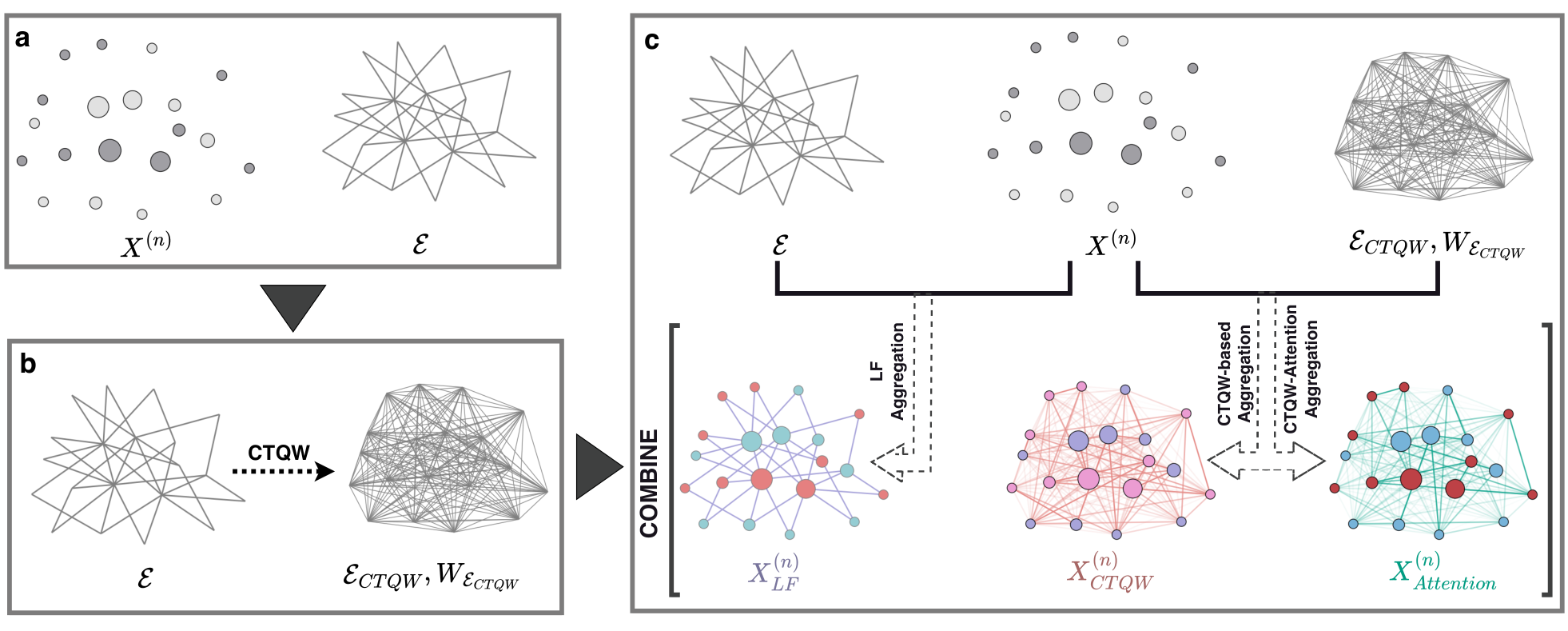
CTQW-GNN uses classically simulated continuous-time quantum walks to preserve graph-frequency information and mitigate over-smoothing. It combines unitary feature propagation, attention over long-range neighbors, and low-frequency aggregation, with theoretical analysis and evaluation on 14 homophilic and heterophilic graph benchmarks.